
There is something about being handed a crown, assigned a knight, and immediately deciding that his victory matters to you.
I recently visited Medieval Times in Lyndhurst, New Jersey, and with Halloween around the corner, it felt like the perfect time to think about why people are still so drawn to immersive experiences.
What stood out most was not just the jousting, the food, or the theatrical setting. It was how quickly the experience turned a room full of strangers into a community.
Guests are divided into sections based on the color of their crowns, with each section assigned a knight to support. Once the tournament begins, the crowd commits. People cheer, boo, react together, and become genuinely invested in a shared outcome.
Unfortunately, our knight lost. But by that point, winning almost felt secondary. The real magic was how quickly we went from spectators to participants.
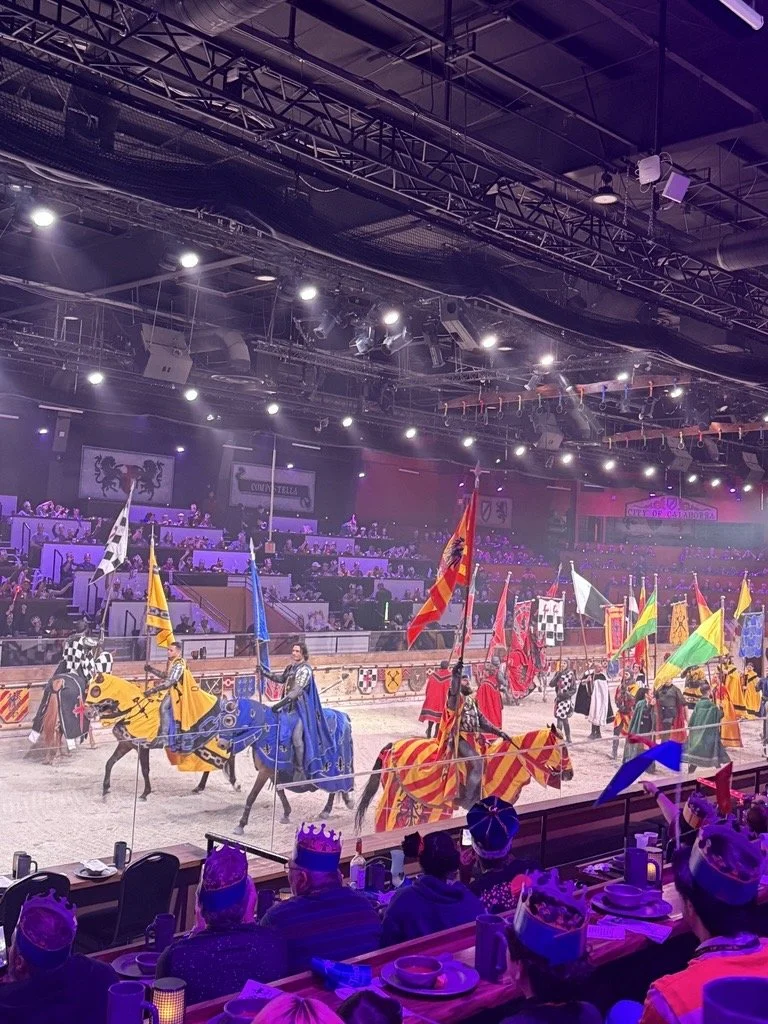
PEOPLE WANT A ROLE INSIDE THE EXPERIENCE
Medieval Times works because you are not simply watching entertainment from a seat. From the moment you arrive, you are invited into the world.
The castle opens before the show, giving guests time to take photos, explore the Hall of Arms, visit the gift shop, grab a drink, and immerse themselves in the environment before entering the arena. Once inside, your crown connects you to your section and your knight.
That small act of assigning people a side changes the energy completely. Suddenly, you have something to cheer for and people around you are cheering for the same thing.
For brands thinking about immersive experiential marketing, fan engagement, or community building, there is a valuable lesson here. People are more likely to engage when they understand their role in an experience and feel connected to something larger than themselves.
You do not always need an elaborate interaction or cutting-edge technology to make that happen. Sometimes giving people a role, a team, a challenge, or a shared ritual is enough to turn passive observation into active participation.
The strongest experiences do not just give people something to watch. They give people a reason to care.
EVEN THE DINNER BECOMES PART OF THE STORY
The immersion continues through the meal.
A four-course feast is served during the tournament, and part of the fun is eating with your hands rather than traditional utensils. Drinks arrive as part of the themed service, and the entire dining experience reinforces the world around you. Silverware is available if requested, but eating without it is intentionally part of the experience.
That detail stuck with me because it demonstrates how immersion can come from the smallest decisions.
The food is not simply catering happening alongside entertainment. It becomes part of the storytelling.
When experiential design works well, every touchpoint contributes to the same narrative. The environment, service, product, staff, entertainment, and audience behavior all reinforce the experience rather than competing for attention.
RETAIL BECOMES MORE VALUABLE WHEN IT REPRESENTS A MEMORY
There is also a compelling experiential retail lesson in the way Medieval Times builds its guest journey.
Before and after the tournament, visitors encounter gift shops, photo opportunities, themed merchandise, drinks, medieval artifacts, and opportunities to represent their knight's colors. After the show, guests can return to the Hall of Arms for photos with the knights while the gift shop remains open.
What makes that retail environment effective is the connection between the merchandise and the experience itself.
A crown is not just an object when everyone around you is wearing one. A flag means more when you have spent the evening waving it for your knight. A photo or souvenir becomes a reminder of a night when you were actively part of the story.
For brands, this is an important distinction. Experiential retail marketing can move beyond product display and transactions to create merchandise that represents participation, identity, and shared memories.
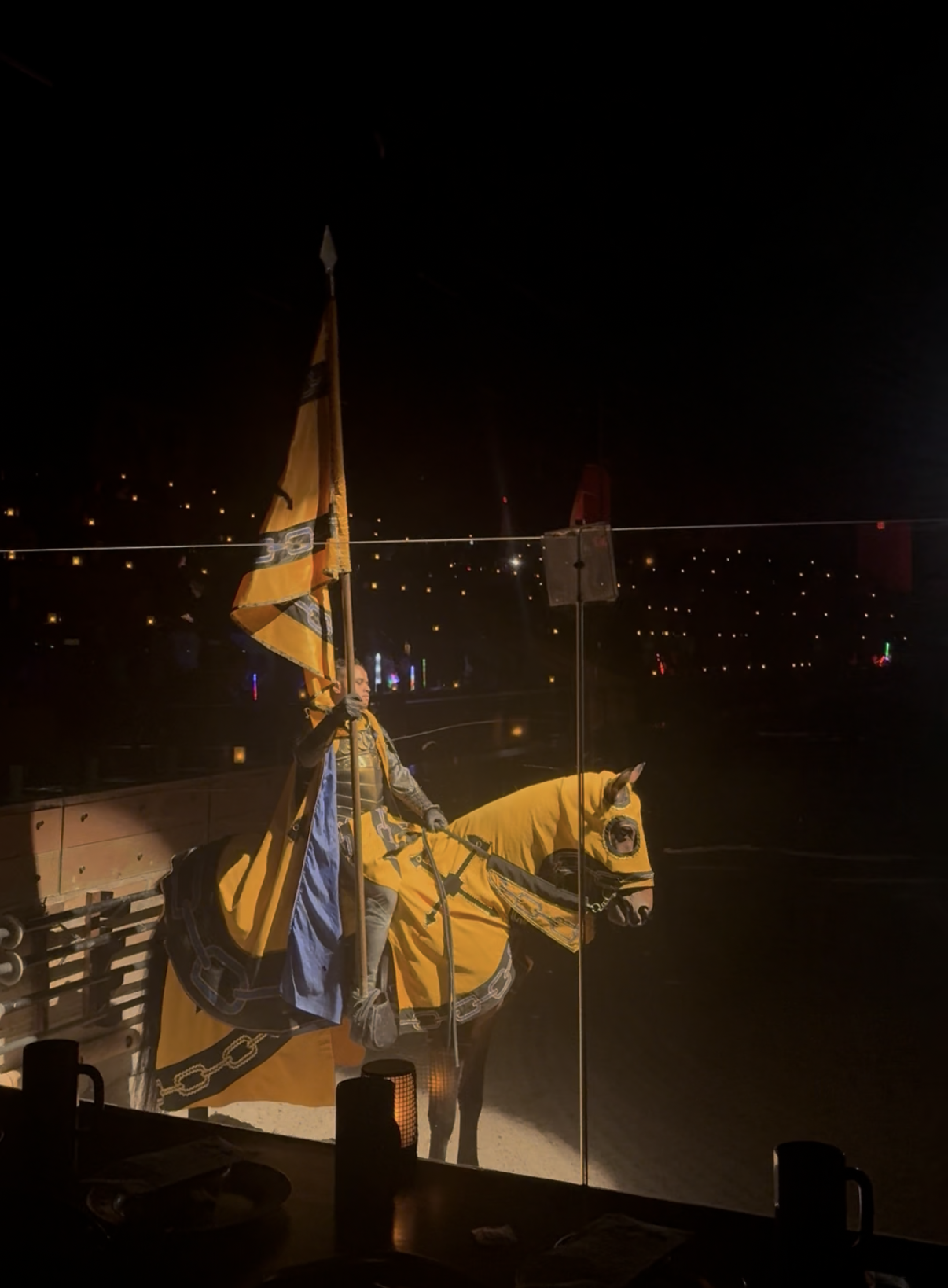
PEOPLE STILL CRAVE SHARED EXPERIENCES
Especially around Halloween, we see how much people enjoy opportunities to temporarily become someone else, step into another world, dress differently, and participate in something theatrical.
But what I experienced at Medieval Times went beyond the novelty. The arena was loud. People were genuinely invested. Complete strangers were reacting together because the experience had given them a shared identity for the night.
That kind of human connection is difficult to replicate digitally. Consumers can stream entertainment, order dinner, and shop from home. What they cannot fully recreate is the feeling of hundreds of people around them reacting to the same thing at the same time.
WHAT BRANDS CAN LEARN FROM IMMERSIVE ENTERTAINMENT
The takeaway is not that every brand activation needs costumes, castles, or a jousting tournament.
It is that the strongest experiences give audiences something meaningful to do.
That might mean choosing a side, customizing a product, participating in a challenge, contributing to an installation, meeting a talent they care about, or gathering around a shared interest.
The experience becomes stronger when the consumer has a role inside it.
For brands investing in retail activations, immersive experiences, sports and entertainment partnerships, pop-ups, or live events, participation can help turn foot traffic into community and a transaction into a memory.
LOOKING FOR AN EXPERIENTIAL MARKETING AGENCY IN NYC?
SoHo Experiential is a New York City experiential marketing agency helping brands create immersive brand activations, experiential retail programs, sports and entertainment experiences, pop-ups, product launches, sampling campaigns, fan engagement programs, and large-scale live events.
We connect experiential strategy, creative development, production, partnerships, talent integration, and on-site execution to create experiences people actively want to participate in.
For brands searching for an experiential marketing agency in NYC, a retail activation partner, an immersive event agency, or a team to support an upcoming RFP, visit sohoexp.com/contact to start a conversation.
THE SOHO TAKE
People remember experiences differently when they are given a role inside them.
I may not remember every moment of the tournament, but I remember wearing my crown, eating dinner without utensils, cheering with the people around me, and collectively rooting for a knight who ultimately did not win.
The details worked together to make us feel like participants instead of spectators. For brands, that is often where the greatest opportunity lies.
Give people something to do, someone to connect with, and a reason to feel like they belong inside the experience.