
Brands Built for Fandom: From Participation to Belonging
There was a time when brand experience was defined by visibility. Show up bigger, louder, and in more places than anyone else, and you would win attention.
For a while, that worked. But the conditions have changed. Audiences are more fragmented, attention is harder to hold, and loyalty no longer behaves the way it used to.
What used to be a game of reach has quietly become a question of resonance. Today, the brands that win aren’t the ones people notice; they’re the ones people feel part of.
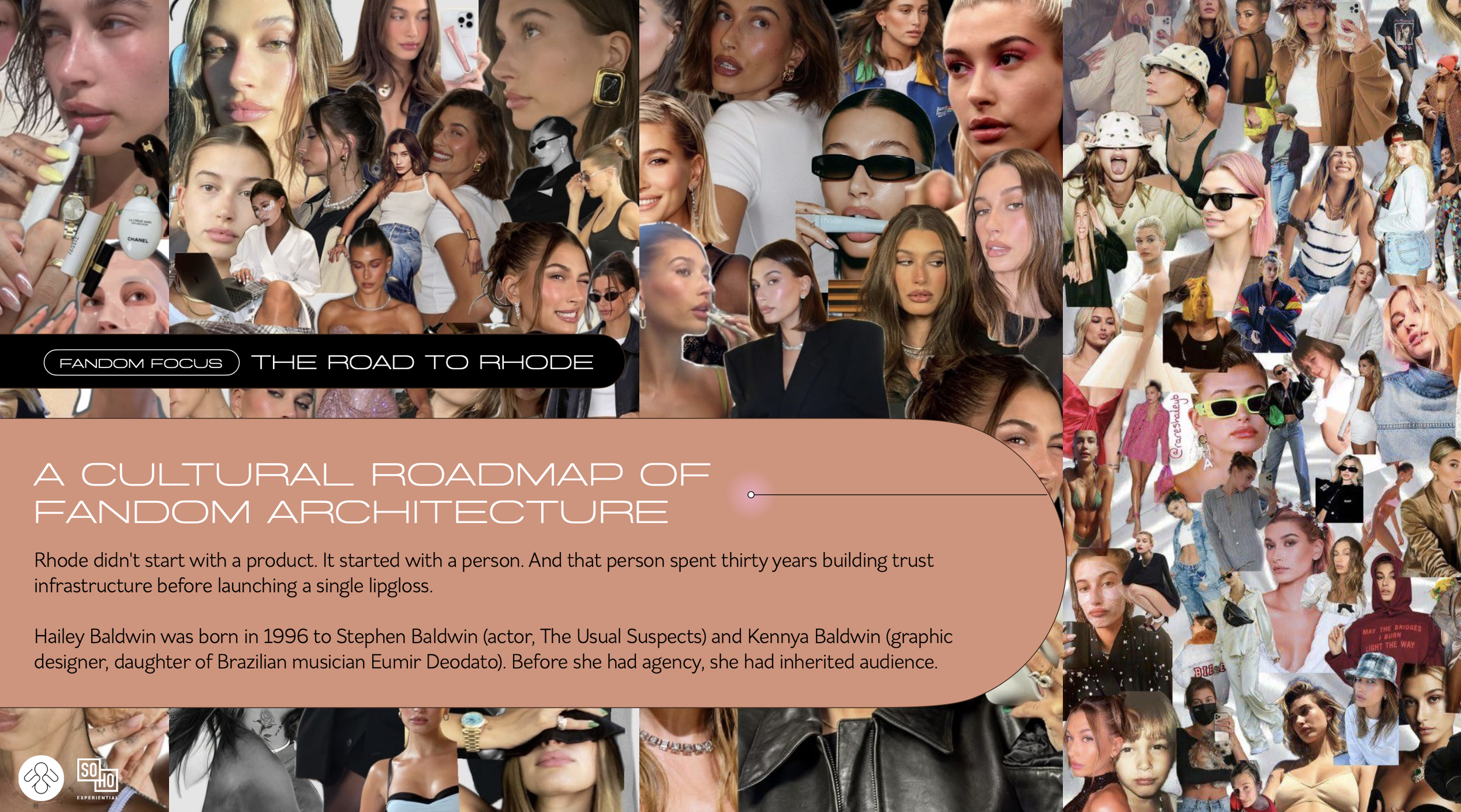
From Attention to Identity
Over the past year, we’ve been tracking a deeper shift in how people relate to brands.
People are no longer satisfied with consuming experiences. They want to participate in them, shape them, return to them, and recognize themselves inside them. And when that happens consistently, something more powerful starts to form. Not engagement, and not loyalty as we’ve traditionally defined it, but something closer to identity.
This is fandom. And it’s no longer reserved for entertainment or sports. It’s becoming a structural advantage for any brand willing to design for it intentionally.
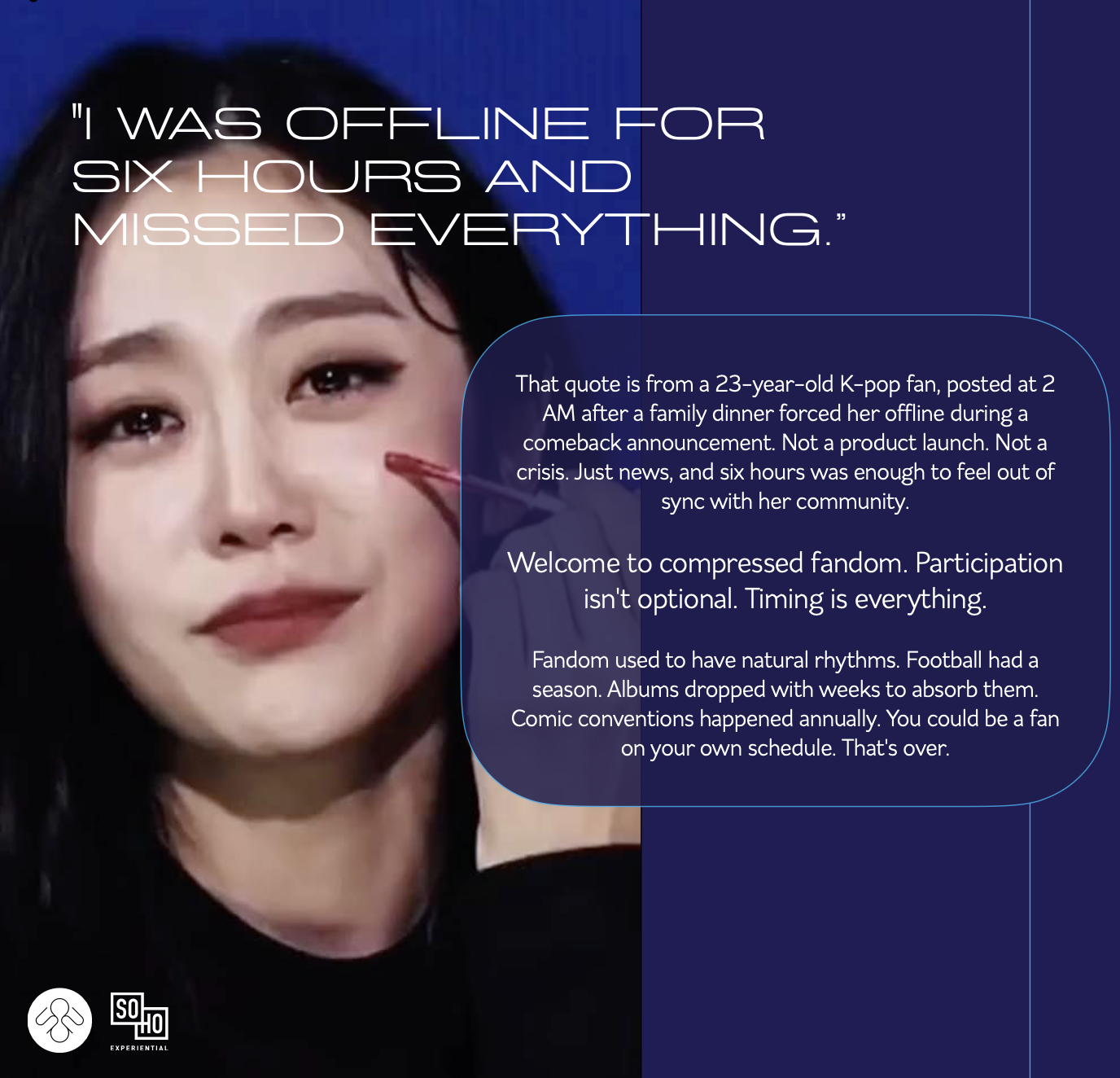
What We Set Out to Understand
This year, we asked a different kind of question. Not how brands can create better one-off experiences, but how they become part of people’s lives in a way that compounds over time. That question became the foundation for our 2026 report, Brands Built for Fandom.
Rather than documenting surface-level trends, the report looks at the underlying mechanics shaping this shift. What’s changing in culture, how participation is evolving, and what it actually takes to build something people want to return to, not just attend once. It reframes brand experience as a system, not a moment.
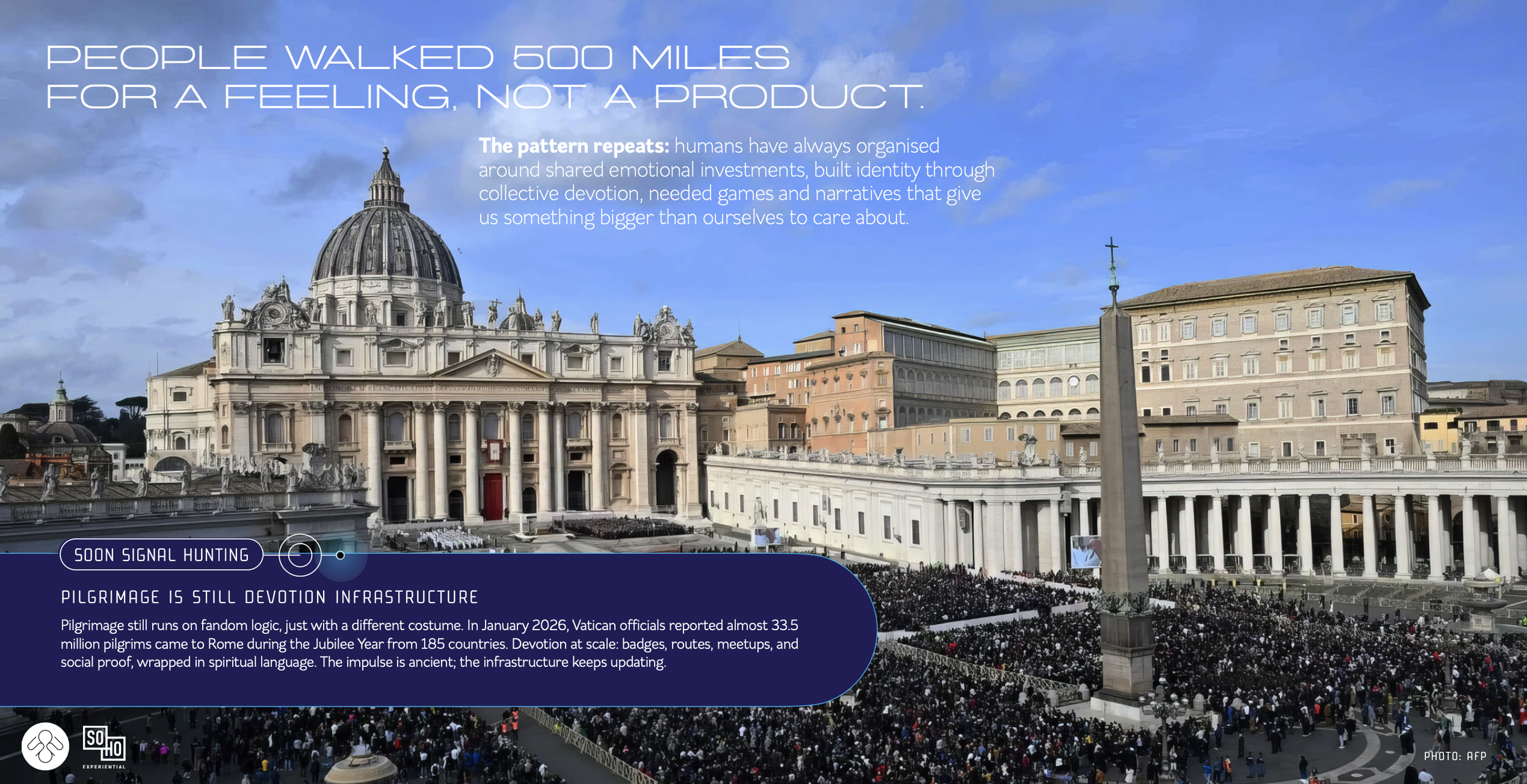
What You’ll Find Inside
The 120-page report is structured across three acts, each unpacking a different layer of how fandom has evolved and what it demands from brands now. Across the report, we draw on examples from brands like Netflix, Formula 1, Coca-Cola, Lululemon, and Jordan to illustrate how fandom is being built in real time.
Act One: Why Fandom Became Everything
The first section explores the conditions that made fandom not just relevant, but inevitable. It traces how identity, emotion, memory, and speed have compressed into a single cultural force, reshaping how people engage with the world around them. What used to be passive interest has become deeply personal, with platforms accelerating identity formation and participation becoming a default expectation, not a bonus feature.
It also examines how systems, from algorithms to financial models, have intensified fandom behaviors. Culture is no longer something people observe at a distance. It’s something they invest in, shape, and carry as part of who they are. By the end of this section, it becomes clear that fandom isn’t a niche behavior. It’s the underlying logic of modern engagement.
Act Two: How Fandom Actually Works
The second section shifts from why to how. It breaks down the mechanics of fandom at a structural level, looking at how communities form, organize, and sustain themselves over time. What emerges is a move away from traditional audience thinking toward something far more dynamic and self-sustaining.
Here, participation is no longer a tactic. It’s a system. Communities begin to generate their own momentum, roles emerge organically, and value is created through contribution rather than consumption. The report explores what happens when brands step into these environments, and more importantly, what happens when they try to control them. It reframes fandom as something that cannot be owned, only facilitated, and shows why brands need to rethink their role within these ecosystems.
Act Three: Building Culture, Not Cults
The final section turns toward application. It introduces a practical framework for brands to determine whether fandom is the right strategic path, and if so, how to build it responsibly and sustainably.
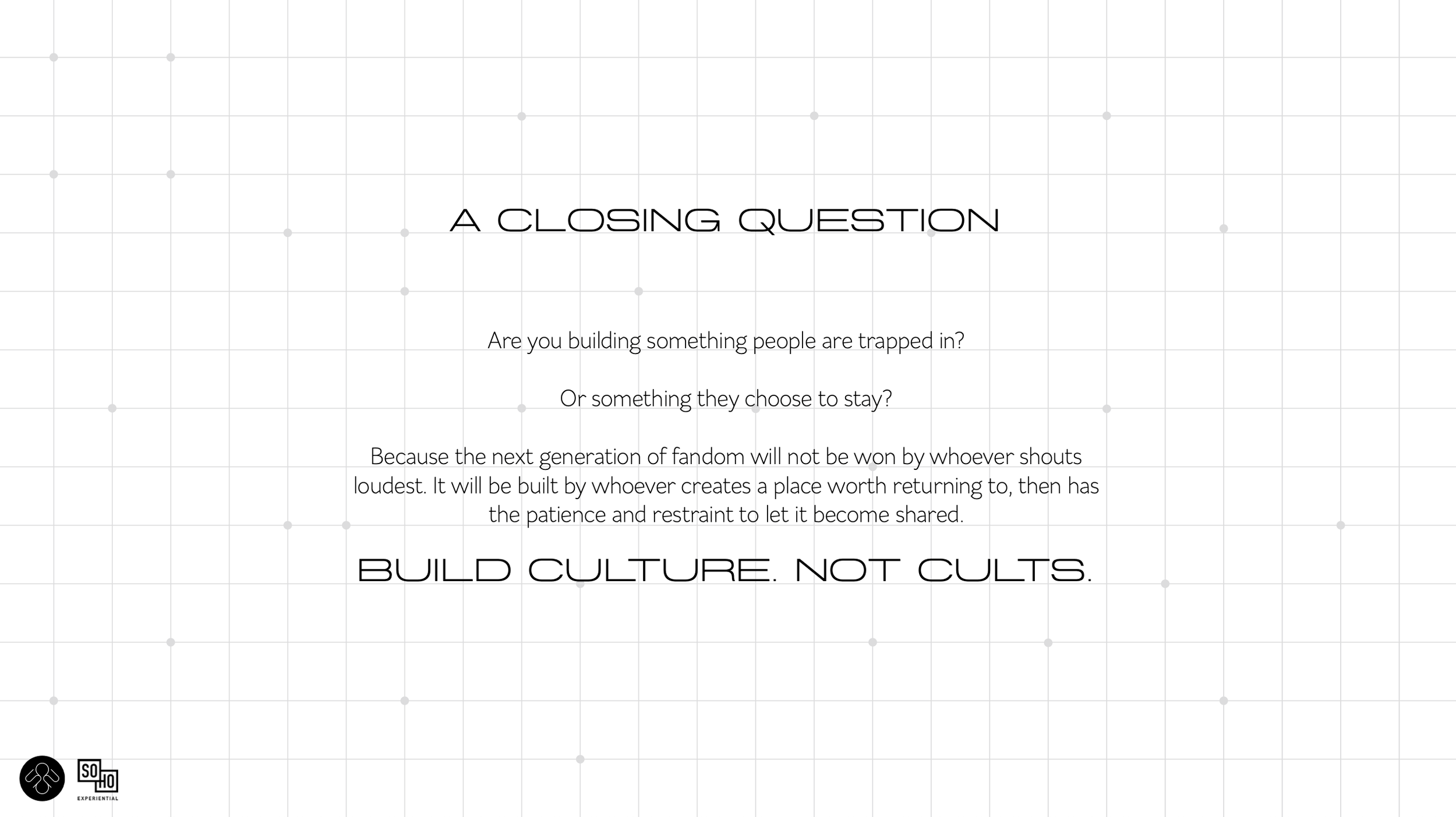
Rather than chasing intensity or short-term hype, this section focuses on designing systems that last. It explores how to create environments that evolve with their communities, how to build continuity in a world of constant acceleration, and how to prioritize co-authorship over control. The distinction is subtle but critical. The goal is not to create dependency, but to build something people choose to return to.
This is where fandom moves from theory to strategy, offering a clearer lens for how brands can participate in culture without overpowering it.
The Throughline
Across all three acts, a consistent pattern emerges. Fandom isn’t built through a single moment or campaign. It’s built through systems that invite participation, create meaning over time, and allow people to see themselves reflected in the experience.
That shift changes everything.
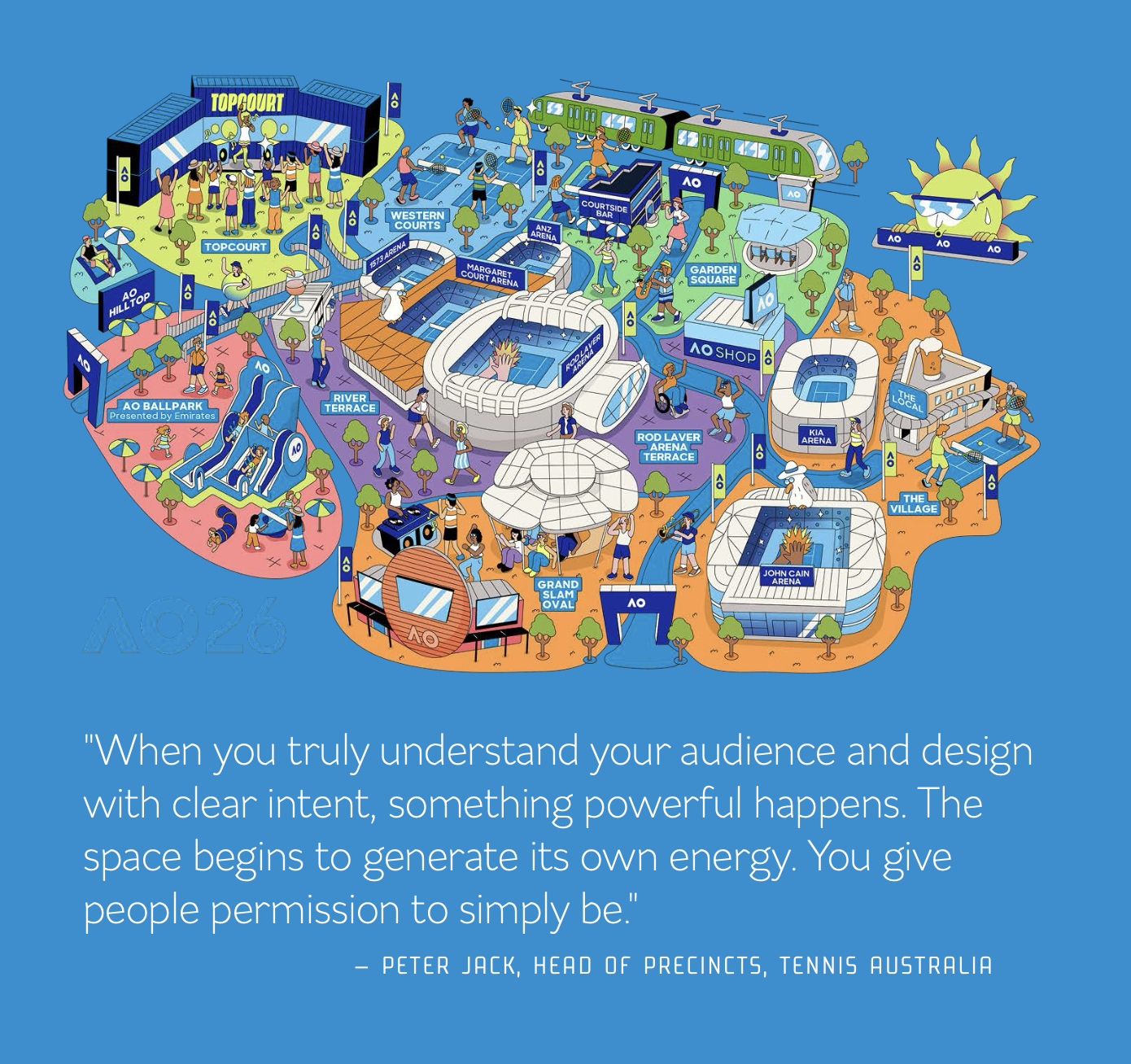
Why This Matters Now
What we’re seeing isn’t a passing trend. It’s a directional shift in how brands grow. The ones that continue to optimize for attention alone will find themselves working harder for diminishing returns, while the ones that rethink their role entirely will build something far more durable.
The future of brand experience isn’t about creating moments people remember. It’s about creating systems people return to.
Get the Report
If you’re thinking about how your brand shows up in culture, how it builds real loyalty, or how to design experiences that extend beyond a single moment, this is where the conversation starts.
Download the full Brands Built for Fandom report to go deeper into the thinking behind it.